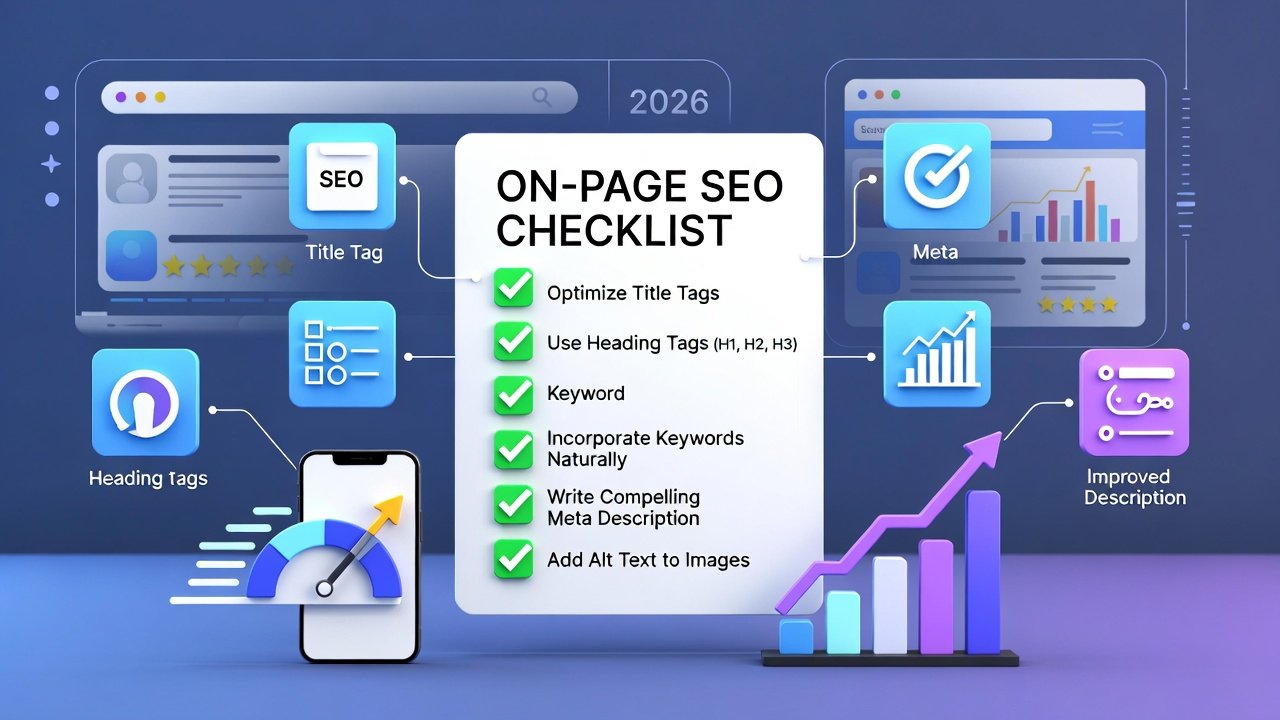
If you are just starting your journey in digital marketing, the on page seo checklist for beginners is your first step toward success. This on page seo checklist for beginners provides simple, actionable steps that any new website owner can follow to enhance visibility on search engines. No advanced skills are required — only consistent application of these proven techniques. By focusing on on-page SEO optimization right from the start, you lay a solid foundation for long-term growth. Beginners often overlook these elements, but mastering them helps your content reach the right audience naturally and improves overall user satisfaction on your site.
In today’s competitive online world, search engines reward websites that deliver clear, helpful information. This comprehensive guide breaks everything down into easy-to-follow sections. You will learn exactly what to check and how to improve each part of your pages. Whether you manage a personal blog, a small business website, or an informational platform, these strategies work for everyone. Let’s dive in and turn your site into a well-optimized powerhouse.
What Is On-Page SEO and Why Does It Matter for Beginners?
On-page SEO refers to all the elements you can control directly on your own website pages. It includes everything from the words you write to how you structure your content and design your layout. Unlike off-page factors, on-page SEO optimization stays completely under your control, making it the perfect starting point for beginners.
Why is it so important? Search engines evaluate each page to decide if it matches what users are looking for. When your pages follow best practices, they become more relevant, readable, and user-friendly. This leads to higher rankings, increased organic traffic, and better engagement. Beginners who ignore on-page elements often struggle with low visibility even after months of effort. By using this on page seo checklist for beginners early on, you avoid common pitfalls and build momentum quickly.
Studies and real-world results show that well-optimized pages can rank faster and retain visitors longer. In 2026, with smarter algorithms focusing on user experience, on-page SEO optimization has become even more essential. It helps your site stand out without relying on paid promotions or complex campaigns.
The Complete On Page SEO Checklist for Beginners
Here is the heart of this guide — a detailed, step-by-step checklist every beginner should follow. Go through each item one by one and apply the tips to your pages. Track your progress with a simple spreadsheet if needed.
1. Optimize Your Title Tags
The title tag is the first thing people and search engines see in search results. Keep it under 60 characters so it displays fully. Include your main keyword naturally near the beginning. Make it compelling and descriptive.
How to do it: Use your content management system to edit the title. For example, instead of “Home,” write “Best Beginner Gardening Tips for 2026 – Easy Guide.” Always preview how it looks in search results.
Why it works: A clear title improves click-through rates and tells search engines exactly what the page is about. Beginners often use vague titles, which hurts rankings.
Pro tip: Test variations and choose the one that feels most helpful to readers.
2. Craft Powerful Meta Descriptions
Even though meta descriptions do not directly affect rankings, they influence whether people click your link. Write 150–160 characters that summarize the page and include a call to action.
Beginner steps: Add your primary keyword once. Focus on benefits. Avoid keyword stuffing. Tools like free preview checkers help you see how it appears.
Example: “Learn easy on-page SEO optimization techniques with this clear guide. Improve your website rankings and attract more visitors naturally in 2026.”
Strong meta descriptions increase clicks, which signals value to search engines.
3. Use Proper Heading Structure (H1, H2, H3)
Headings organize your content and make it scannable. Use one H1 per page — usually the main title. Then add H2 and H3 for sub-sections.
Checklist tips:
- Include related keywords in headings naturally.
- Keep headings short and descriptive.
- Maintain logical flow: H2 for main sections, H3 for details.
Why beginners benefit: Good headings improve readability and help search engines understand your content hierarchy. Readers stay longer on well-structured pages.
4. Create SEO-Friendly URL Structures
Clean URLs are short, readable, and include keywords. Avoid numbers, dates, or random characters.
Best practice: Use hyphens to separate words. Example: /on-page-seo-checklist-for-beginners instead of /post?id=123.
How to implement: Set permanent URLs when publishing new content. This simple change helps both users and search engines.
5. Focus on High-Quality Content Creation
Content remains king in on-page SEO optimization. Write helpful, original articles that answer real questions. Aim for 1500–2500 words on important topics, like this guide.
Beginner checklist:
- Research user intent first.
- Use simple language.
- Add lists, examples, and practical steps.
- Update old content regularly with fresh information.
High-quality content encourages shares and longer time on page, both positive ranking signals.
6. Implement Keyword Optimization Naturally
Place your main keyword in the first 100 words, headings, and throughout the text. Also include 2–3 related keywords such as “beginner SEO optimization,” “website ranking checklist,” and “on-page SEO techniques.”
Rule for beginners: Maintain natural flow. Never force keywords. Read the text aloud to check readability.
7. Optimize Images for Speed and Relevance
Images make pages engaging but can slow them down if not handled properly.
Step-by-step for beginners:
- Use descriptive file names (e.g., on-page-seo-checklist-image.jpg).
- Add alt text with keywords where appropriate.
- Compress images to under 100 KB.
- Choose relevant, high-quality visuals.
Optimized images improve accessibility and load times, which search engines love.
8. Build Smart Internal Linking
Link to other pages on your own site to help visitors explore more content and distribute authority.
How to do it:
- Link to related articles using descriptive anchor text.
- Aim for 3–5 internal links per page.
- Avoid over-linking.
Internal linking keeps users on your site longer and helps search engines discover all your pages. For advanced ideas on strengthening this strategy, explore The Role of Internal Linking in Amplifying Guest Post SEO Value on our blog network.
9. Ensure Mobile-Friendly Design
Most users browse on phones. Make sure your site looks great and works smoothly on mobile devices.
Quick checks:
- Use responsive themes.
- Test with free mobile preview tools.
- Keep buttons and text large enough to tap.
Mobile optimization is now a core ranking factor.
10. Improve Page Speed and Performance
Fast-loading pages reduce bounce rates and improve rankings.
Beginner actions:
- Enable browser caching.
- Minify CSS and JavaScript files.
- Use a content delivery network if possible.
- Aim for under 3 seconds load time.
Test regularly with free speed tools and fix issues step by step.
11. Add Structured Data (Schema Markup)
Schema helps search engines understand your content better and can create rich snippets in results.
Easy start for beginners: Use simple FAQ or HowTo schema on relevant pages. Many free generators exist online.
12. Focus on Readability and User Experience
Short paragraphs, bullet points, and clear fonts make content enjoyable.
Tips:
- Use active voice.
- Break up long text.
- Add white space.
Better readability leads to happier visitors and stronger engagement signals.
Common Mistakes Beginners Make in On-Page SEO
Even with a solid checklist, new users often stumble. Avoid these errors:
- Keyword stuffing
- Ignoring mobile users
- Using duplicate titles and meta descriptions
- Forgetting to update old content
- Poor image optimization
Recognizing these pitfalls early saves time and prevents ranking drops.
Helpful Tools for On-Page SEO Optimization
Beginners do not need expensive software. Start with free options like Google Search Console, browser extensions for analysis, and built-in site tools.
For those wanting to take the next step with modern assistance, check our detailed post on AI Tools for On-Page SEO Optimization Step by Step Guide 2026. It shows simple ways to automate checks without losing the human touch.
Another excellent resource is The Ultimate SEO Audit Checklist for WordPress Sites in 2026 — perfect if you use WordPress.
Understanding the technical side also helps. Read What is Technical SEO and How It Works to connect on-page efforts with overall site health.
How to Apply This On Page SEO Checklist for Beginners Consistently
When you apply the on page seo checklist for beginners consistently, results start appearing within weeks. Create a monthly routine: audit new pages before publishing, review older content, and track improvements in search console. Small daily habits compound into major ranking gains.
Stay patient and focus on providing genuine value. Search engines reward sites that genuinely help users.
Measuring Success and Next Steps
After implementing the checklist, monitor key metrics: organic traffic, bounce rate, average time on page, and keyword positions. Use free analytics tools to see progress.
Once on-page SEO is strong, you can explore complementary strategies like technical improvements and quality content expansion. The foundation you build here will support all future growth.
Conclusion: Start Your SEO Journey Today
You now have a complete, beginner-friendly roadmap. The on page seo checklist for beginners is not complicated — it simply requires attention to detail and a desire to help your audience. Apply these steps to every new page and revisit existing ones regularly.
Remember, on-page SEO optimization is an ongoing process, not a one-time task. Stay updated with best practices as search engines evolve, but always keep user experience at the center.
Your website can rank higher, attract more visitors, and grow steadily when you follow this guide. Take action on one section today, then another tomorrow. Before long, you will see the rewarding results of your efforts.