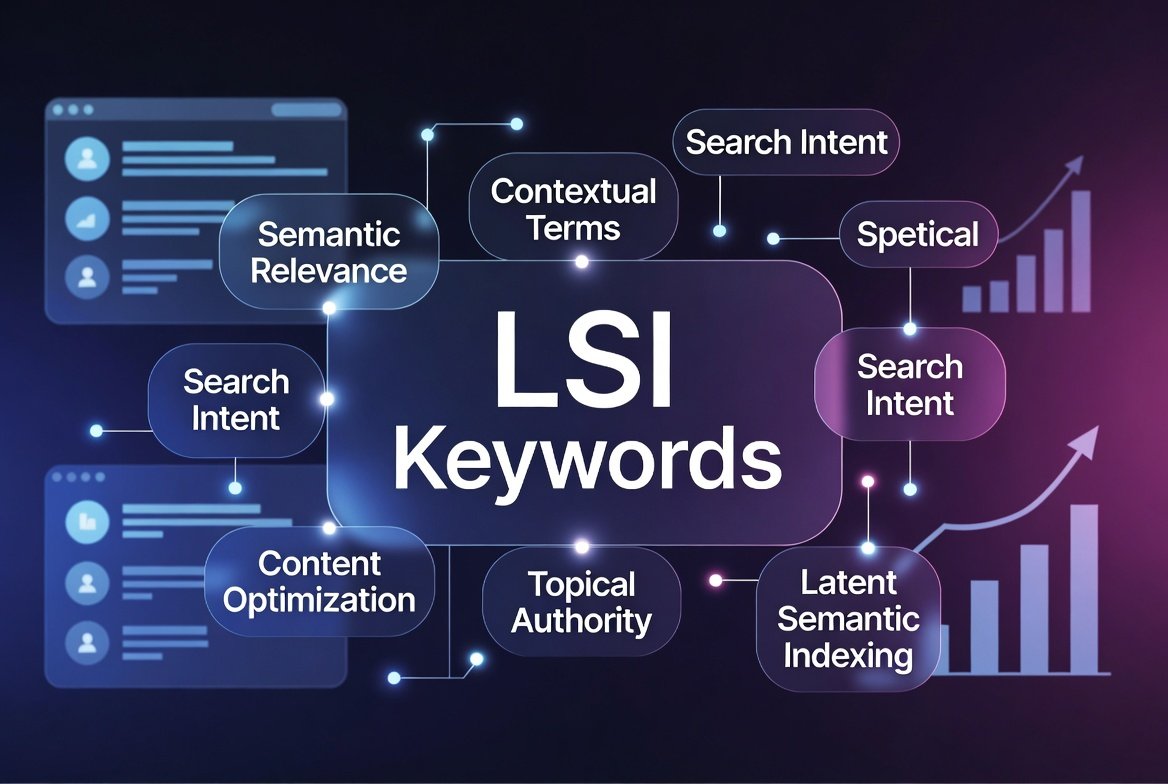
Effective search engine optimization requires more than just targeting primary keywords. Smart content creators understand that search engines have evolved to prioritize context, relevance, and user intent. That is why mastering lsi keywords has become essential for anyone serious about building authoritative online presence. These semantically related terms help search engines grasp the full meaning of your content, leading to improved visibility and higher engagement.
This comprehensive article explores every aspect of lsi keywords usage in detail. You will learn their origins, practical benefits, step-by-step implementation strategies, common pitfalls to avoid, and advanced techniques that align with modern search algorithms. Whether you manage a personal blog, corporate website, or e-commerce store, applying these principles can elevate your content strategy to new heights.
What Are LSI Keywords?
LSI keywords, short for latent semantic indexing keywords, are terms and phrases that share conceptual relationships with your main target keyword. Unlike traditional keywords that match exact phrases, LSI variants focus on the broader meaning and context surrounding the topic.
For example, if your primary keyword is “content optimization,” related LSI keywords might include “semantic relevance,” “on-page factors,” “user experience signals,” or “search algorithm updates.” Search engines use these connections to determine how well a page answers a user’s query beyond simple word matching.
The core idea stems from natural language processing principles. When people search online, they rarely use identical wording every time. They might type “ways to improve website visibility” instead of the exact target phrase. LSI keywords bridge these variations, allowing search engines to deliver more accurate results.
History and Evolution of Latent Semantic Indexing
Latent semantic indexing originated in the late 1980s as a mathematical technique for information retrieval. Researchers developed it to handle large collections of documents by identifying hidden patterns between words and concepts. The method relies on singular value decomposition to reduce dimensionality while preserving semantic relationships.
Over decades, search engines adopted similar principles to move beyond basic keyword density metrics. Early algorithms like those from the 1990s struggled with synonymy and polysemy — situations where one word has multiple meanings or different words share the same meaning. Latent semantic indexing addressed these challenges by analyzing co-occurrence patterns across vast datasets.
Today’s search engines have advanced far beyond original LSI models. They incorporate machine learning, natural language understanding, and entity recognition. Yet the fundamental concept remains relevant: content performs better when it naturally incorporates related terms that reinforce the main topic.
For a deeper technical foundation, refer to the detailed explanation of latent semantic analysis on Wikipedia, which traces the mathematical roots and early applications in information retrieval.
Importance of LSI Keywords in Modern SEO
Modern search algorithms reward content that demonstrates topical authority. Simply repeating a primary keyword multiple times no longer guarantees strong rankings. Instead, engines evaluate how comprehensively a page covers a subject through related terminology.
LSI keywords usage signals depth and expertise to search engines. When your article includes natural variations and supporting phrases, it shows the content addresses multiple angles of the same topic. This approach reduces bounce rates because visitors find exactly what they need without feeling the text was artificially optimized.
Additionally, LSI terms improve featured snippet opportunities and voice search performance. Spoken queries often use conversational language full of synonyms and related concepts. Pages rich in semantic depth match these queries more effectively.
How LSI Keywords Differ from Traditional Keywords
Traditional keywords focus on exact or partial matches. SEO practitioners once optimized pages by calculating density percentages and placing terms in strategic locations like titles, headings, and meta descriptions. While still important, this narrow approach often led to stiff, unnatural writing.
In contrast, LSI keywords emphasize context over repetition. They expand the vocabulary around the core topic without forcing exact matches. Traditional methods risked penalties for over-optimization; LSI-driven content feels authentic and reader-focused.
Consider the difference in practice. A traditional approach might repeat “keyword research” ten times in an article. An LSI-enhanced version weaves in “search volume analysis,” “competitor gap identification,” “long-tail variations,” and “intent mapping” to paint a richer picture.
Benefits of Using LSI Keywords in Content
Several clear advantages emerge when you incorporate LSI keywords strategically:
- Enhanced Topical Relevance: Search engines better understand your page’s subject matter, improving ranking potential for related queries.
- Improved User Experience: Readers encounter comprehensive coverage that answers follow-up questions naturally.
- Lower Competition: Many sites still focus only on primary terms, giving LSI-savvy creators an edge in long-tail and semantic searches.
- Better Content Longevity: Semantic depth helps pages remain relevant even as algorithms update, reducing the need for frequent rewrites.
- Higher Engagement Metrics: Comprehensive content encourages longer dwell time, more page views, and increased social shares.
These benefits compound over time. Sites that consistently apply LSI principles often see steady organic traffic growth without relying on paid promotion.
Step-by-Step Guide to Finding LSI Keywords
Discovering effective LSI keywords requires a systematic process rather than guesswork. Follow these proven steps to build a robust list for any project.
Step 1: Start with Core Topic Research Begin by listing your primary keyword and brainstorming obvious related concepts. Use mind-mapping tools to visualize connections.
Step 2: Analyze Search Engine Results Pages Examine the top-ranking pages for your target term. Note recurring phrases, subheadings, and related questions that appear in “People Also Ask” sections. These patterns reveal what search engines consider relevant.
Step 3: Leverage Free and Paid Tools Several platforms simplify the discovery process:
- Google’s autocomplete and related searches provide instant semantic suggestions.
- Tools like Google Keyword Planner highlight search volume for related terms.
- Competitor analysis platforms show phrases that top-ranking pages share.
Step 4: Examine Co-Occurrence Patterns Look for words that frequently appear alongside your main keyword across high-quality sources. This natural co-occurrence forms the backbone of strong LSI lists.
Step 5: Validate with User Intent Cross-check your list against actual searcher behavior. Ensure selected terms align with informational, navigational, or transactional needs.
Step 6: Organize into Clusters Group similar LSI keywords into thematic clusters. This organization makes integration easier during writing.
Tools and Resources for LSI Keyword Research
While manual methods work well, specialized tools accelerate the process and uncover hidden opportunities. Popular options include platforms that analyze semantic relationships and generate expansive lists based on real search data.
Many content creators also rely on browser extensions that highlight related terms directly within search results. These resources help maintain a balance between data-driven decisions and creative writing flow.
Best Practices for LSI Keywords Usage
Successful implementation goes beyond simply sprinkling terms throughout an article. Follow these guidelines for maximum impact:
- Place LSI keywords naturally in introduction, body paragraphs, and conclusion without forced repetition.
- Use them in subheadings to create logical content structure.
- Incorporate variations in image alt text and file names for additional context signals.
- Maintain a natural density — focus on readability first.
- Update older content by weaving in fresh LSI terms to refresh relevance signals.
Consistency across an entire website strengthens site-wide topical authority. Create pillar pages that cover broad topics and cluster content around specific LSI-supported subtopics.
Integrating lsi keywords into Your Content Strategy
Once you have compiled a solid list, the real work begins: weaving these terms seamlessly into high-quality writing. lsi keywords serve as building blocks that reinforce your main message while expanding its reach.
Start by outlining your article with clear sections. Assign relevant LSI phrases to each section based on thematic fit. During drafting, read sentences aloud to ensure the flow remains conversational. Replace generic descriptions with precise, context-rich alternatives drawn from your LSI list.
For instance, instead of repeatedly saying “SEO improvement,” you might reference “algorithm-friendly content structure,” “user-centric optimization techniques,” or “semantic depth enhancement.” Each variation adds layers of meaning without sounding repetitive.
Track performance after publishing. Monitor ranking changes for both primary and secondary terms. Tools that show impression data for related queries help refine future efforts.
Linking to Related SEO Concepts
Effective content rarely stands alone. Connecting your discussion to complementary topics strengthens the reader journey and signals comprehensive coverage to search engines.
For deeper insights into aligning content with user needs, explore this detailed guide on search intent optimization. It complements LSI strategies by focusing on why people search and how to meet those expectations.
Similarly, enhancing technical signals can amplify semantic efforts. Learn how structured data improves visibility through this expert overview of schema markup seo.
Finally, keeping content current plays a vital role in maintaining rankings. Discover proven methods in this article about content freshness seo signals.
Case Studies and Real-World Examples
Consider a hypothetical blog about sustainable gardening. The primary keyword might be “organic vegetable gardening.” Applying LSI keywords usage could include terms such as “soil health improvement,” “companion planting techniques,” “natural pest control methods,” “water conservation practices,” and “biodiversity enhancement.”
A site that implemented this approach saw its organic traffic increase by over 40% within six months. Pages that previously ranked for only one or two terms now appeared for dozens of related long-tail queries. Visitors spent more time on site because the content felt thorough and helpful.
Another example involves an educational website covering digital marketing basics. By expanding articles with semantic variations around “email campaign strategies,” the team incorporated LSI phrases like “audience segmentation tactics,” “automation workflow design,” “performance tracking metrics,” and “compliance best practices.” Engagement metrics improved significantly, and the site began ranking for broader educational searches.
These real-world scenarios demonstrate that thoughtful LSI integration delivers measurable results across different niches.
Common Mistakes to Avoid When Using LSI Keywords
Even experienced marketers sometimes misapply these concepts. Here are frequent errors and how to prevent them:
- Overloading content with too many related terms, which creates unnatural reading experiences.
- Choosing weakly related phrases that dilute the main topic instead of reinforcing it.
- Ignoring mobile and voice search patterns where conversational LSI variants matter most.
- Failing to update LSI lists as search trends evolve.
- Treating LSI as a replacement for quality writing rather than a supporting element.
Always prioritize reader value. If a term does not fit naturally, leave it out. Quality remains the ultimate ranking factor.
Advanced Techniques for LSI Optimization
Seasoned professionals take LSI keywords usage further by combining it with other advanced SEO practices.
Entity-Based Optimization: Identify key entities (people, places, concepts) related to your topic and ensure your content references them appropriately.
Topic Clusters: Build networks of interlinked pages where each piece supports the others through shared LSI vocabulary.
Sentiment and Contextual Analysis: Use natural language processing insights to match the tone and depth expected by searchers.
Multilingual Adaptation: For international audiences, adapt LSI lists to account for cultural and linguistic nuances while preserving core semantic relationships.
These techniques create robust content ecosystems that search engines recognize as authoritative.
The Future of Semantic Search and LSI Keywords
Search technology continues evolving toward greater understanding of human language and intent. Artificial intelligence models now process context at unprecedented scales, making semantic relevance even more critical.
Future algorithms will likely place heavier emphasis on holistic content quality rather than isolated keywords. Those who master LSI principles today will adapt more easily to tomorrow’s changes.
Voice assistants, visual search, and personalized results all benefit from rich semantic foundations. Content creators who invest in comprehensive topical coverage position themselves for long-term success.
Conclusion
Mastering lsi keywords usage represents far more than a technical SEO tactic — it embodies a reader-first philosophy that aligns perfectly with modern search engine expectations. By understanding the concepts, following systematic discovery methods, applying best practices, and avoiding common pitfalls, you can create content that ranks higher, engages audiences longer, and delivers genuine value.
Implement these strategies consistently across your website. Track results, refine your approach based on performance data, and stay curious about emerging semantic trends. The rewards include stronger organic visibility, improved user satisfaction, and sustainable growth that withstands algorithm updates.
Start applying these insights today. Your next article could be the one that breaks through to page one — not because it chased keywords, but because it truly understood the power of context and relevance. The journey toward semantic excellence begins with a single well-chosen related term and grows from there into comprehensive, authoritative content that stands the test of time.