Standing out requires more than scattered blog posts or isolated keyword targeting. Search engines have evolved to prioritize depth, relevance, and genuine expertise over quick wins. This shift makes topical authority SEO a cornerstone for any serious content strategy. By focusing on comprehensive topic coverage rather than single pages, websites signal to algorithms that they are reliable sources worthy of top rankings. This approach not only improves visibility but also builds lasting trust with audiences who seek valuable, well-researched information.
Topical authority SEO goes beyond traditional optimization tactics. It involves creating interconnected content that thoroughly explores a subject from every angle, answering user questions before they even ask. In 2026, with AI-driven search results and stricter quality guidelines, sites that master this method see compounding benefits: higher click-through rates, better user engagement, and reduced reliance on paid traffic. Whether you run a small blog or manage enterprise-level content, understanding and applying topical authority principles can transform your online presence into a dominant force within your industry.
This comprehensive guide walks you through everything needed to build and maintain strong topical authority. From foundational concepts to advanced implementation steps, you will gain actionable insights that deliver measurable results while staying aligned with ethical, user-first practices.
What Is Topical Authority in SEO?
Topical authority refers to a website???s demonstrated expertise and comprehensive coverage of a specific subject area. Search engines evaluate this by analyzing how deeply and broadly a site addresses related subtopics, user intents, and semantic connections. Unlike domain authority, which looks at overall site strength through backlinks and age, topical authority zooms in on niche relevance.
Think of it as becoming the definitive resource for a particular field. For example, a site focused on sustainable living does not just publish one article on solar panels. Instead, it creates a full ecosystem covering installation guides, cost analyses, maintenance tips, environmental impacts, and integration with smart home systems. This depth tells algorithms that the site understands the topic holistically.
The concept gained prominence as search engines moved toward semantic understanding. Algorithms now grasp context, relationships between ideas, and user satisfaction signals. A site with strong topical authority ranks for hundreds of related queries because its content forms a logical knowledge graph that search engines can easily crawl and trust.
Key elements that contribute to topical authority include:
- Depth of coverage: Multiple detailed articles exploring subtopics.
- Internal linking structure: Logical connections between pages that guide users and crawlers.
- Content quality: Original insights, data-backed claims, and practical value.
- User signals: Time on page, low bounce rates, and social shares that reinforce relevance.
In practice, topical authority creates a virtuous cycle. Better rankings lead to more traffic, which generates more data and feedback for refining content, further strengthening authority.
Why Topical Authority Matters More Than Ever in 2026
The digital environment in 2026 demands a shift from tactical SEO to strategic authority building. Google and other engines continue refining their systems to favor helpful, experience-driven content while deprioritizing thin or manipulative material. Topical authority directly aligns with these updates by proving real expertise rather than surface-level optimization.
Several factors make it essential this year:
First, AI overviews and generative search summaries pull information from the most authoritative sources. Sites lacking depth rarely appear in these featured responses, missing out on massive visibility opportunities.
Second, user expectations have risen. Audiences want complete answers in one place. Fragmented content frustrates visitors and increases bounce rates, harming rankings.
Third, competition has intensified. New sites enter niches daily, but only those investing in systematic topic coverage gain traction. Generic articles no longer suffice when competitors offer pillar pages supported by dozens of cluster articles.
Moreover, topical authority supports long-term sustainability. While algorithm updates can penalize over-optimized sites, those built on genuine expertise weather changes better. It reduces dependency on external links alone and creates natural backlink opportunities as others cite your comprehensive resources.
From an ethical standpoint, this method prioritizes value creation. It encourages creators to research thoroughly, share unique perspectives, and help users solve real problems???practices that resonate across cultures and communities focused on positive contribution.
Businesses and creators who ignore topical authority risk falling behind. Those who embrace it position themselves as thought leaders, enjoying steadier traffic growth and higher conversion rates over time.
Step-by-Step Guide to Building Topical Authority SEO
Establishing topical authority requires a structured, intentional process. Follow these proven steps to lay a solid foundation and scale effectively. This forms the core of successful topical authority seo implementation.
Step 1: Define Your Core Topic and Niche Focus
Start by selecting one primary topic where you can realistically demonstrate expertise. Avoid spreading efforts too thin across unrelated areas. Analyze your existing knowledge, audience needs, and market gaps.
Conduct audience research through surveys, comment analysis, and search query data. Identify pain points and questions that recur. For a gardening site, the core topic might be ???organic vegetable gardening in urban spaces??? rather than generic ???gardening.???
Narrowing focus allows deeper coverage, which builds authority faster. Document your core topic in a simple mission statement to guide all future content decisions.
Step 2: Perform Advanced Keyword and Topic Research
Move beyond basic keywords to semantic and intent-based research. Tools like keyword explorers reveal related terms, questions, and entity connections.
Create a topic map that groups subtopics logically. Include informational, navigational, and transactional intents. Look for long-tail phrases that indicate specific user needs.
This research phase reveals content opportunities and ensures your coverage feels comprehensive to both users and algorithms.
Step 3: Develop a Content Cluster Architecture
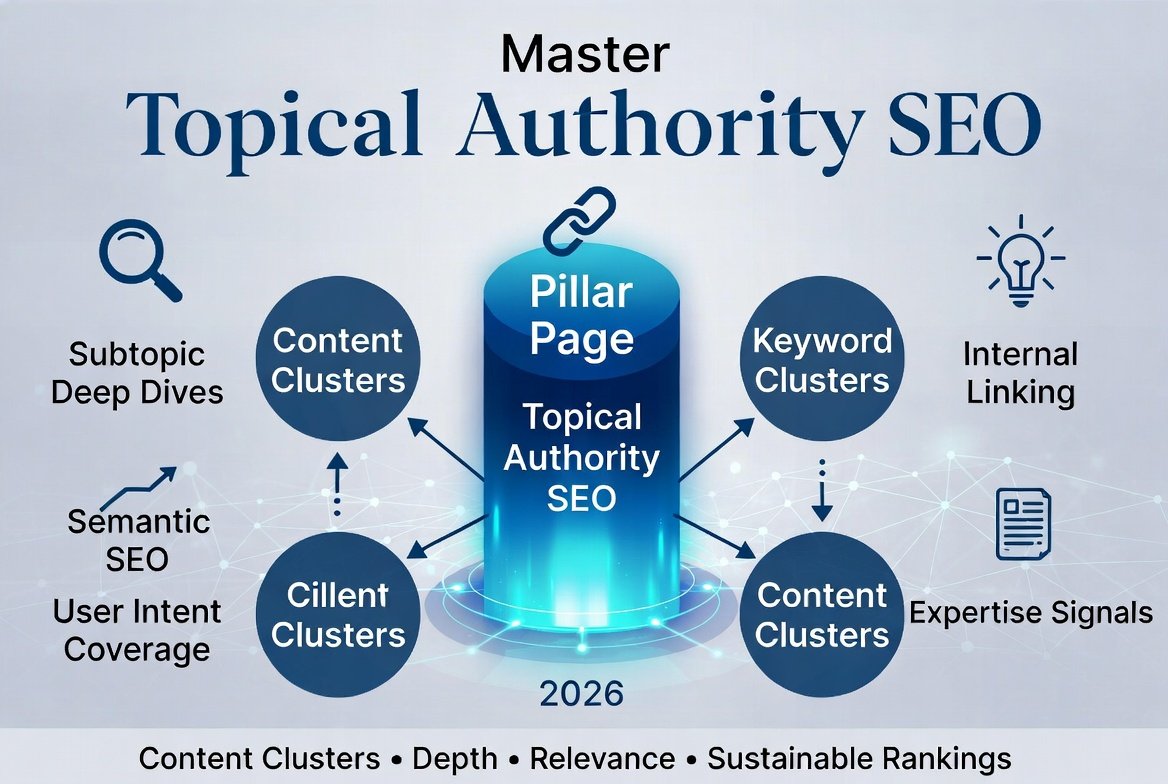
Build around pillar pages and supporting cluster content. The pillar page serves as the comprehensive overview of your core topic. Cluster articles dive into specific subtopics with detailed explanations, examples, and actionable advice.
Design the structure with strong internal linking. Each cluster piece should link back to the pillar and to related clusters, creating a web of relevance.
For deeper insights on structuring these effectively, explore resources like Building topical authority with long tail content clusters in 2026. This approach accelerates authority signals through interconnected depth.
Step 4: Create High-Quality, Original Content
Focus on substance over volume. Each piece should offer unique value???original data, case studies, step-by-step guides, or expert interviews.
Incorporate multimedia like infographics, videos, and downloadable resources to enhance engagement. Use clear headings, bullet points, and scannable formatting for better user experience.
Leverage AI thoughtfully as a starting point, but always add human insight and editing. For practical tips on integrating technology without compromising quality, refer to How to Use AI for SEO Content Creation.
Step 5: Optimize On-Page Elements and Technical Structure
Ensure every page follows best practices for crawlability and readability. Optimize titles, meta descriptions, headings, and image alt text with natural topical terms.
Implement schema markup where relevant to help search engines understand content relationships.
Maintain fast loading speeds and mobile-friendly design, as these support positive user signals that reinforce authority.
Step 6: Strengthen Internal Linking and Site Architecture
Internal links distribute authority and help users navigate your knowledge base. Create contextual links rather than generic ???read more??? buttons.
Use tools to audit linking opportunities regularly. A well-linked site appears more authoritative because information flows logically.
Step 7: Earn Complementary Authority Signals
While content forms the foundation, supportive signals amplify results. High-quality external mentions and ethical link acquisition from relevant sources build overall trust.
Platforms that connect creators with vetted publishing opportunities, such as Linkz.media, can support broader visibility when used responsibly alongside strong content.
Step 8: Monitor, Measure, and Iterate
Track performance using analytics tools. Monitor rankings for your topic cluster, organic traffic growth, and engagement metrics.
Adjust based on data???expand successful subtopics and refresh older content. Consistency over months and years compounds authority.
Creating Content Clusters for Topical Authority
Content clusters represent the practical engine of topical authority building. A typical cluster includes one broad pillar page and 10???30 supporting articles that explore facets of the main topic.
For instance, in a health and wellness niche, the pillar might cover ???building sustainable daily habits for better energy.??? Cluster articles could address morning routines, nutrition timing, stress management techniques, sleep optimization, and exercise integration.
Each cluster piece must stand alone while contributing to the whole. Use consistent terminology and cross-references to strengthen semantic connections.
Benefits of this model include:
- Faster ranking for multiple keywords.
- Improved dwell time as users explore related content.
- Natural internal link equity flow.
- Easier content planning and gap identification.
To maximize impact, update clusters periodically with fresh data or new insights. This keeps authority signals current amid evolving search landscapes.
Many successful sites publish new cluster content on a scheduled cadence???perhaps one pillar update quarterly and supporting articles monthly.
Tools and Resources for Topical Authority Building
Several tools streamline the process:
- Keyword research platforms that show topic volume and related queries.
- Content planning software for mapping clusters and identifying gaps.
- Analytics suites to track topical performance.
- On-page optimization checkers.
- AI-assisted writing aids that maintain originality when guided properly.
Combine these with manual expertise for best results. Free resources like search operator techniques and public data sets also prove valuable for research.
For foundational site setup, consider WordPress SEO Tutorial for Beginners if you are building or optimizing a content-heavy platform.
Measuring and Maintaining Your Topical Authority
Success metrics extend beyond rankings. Track:
- Number of keywords ranked within your topic.
- Organic traffic from target clusters.
- Backlink profile relevance (not just quantity).
- User engagement signals.
- Share of voice in industry searches.
Use specialized SEO dashboards or custom reports to visualize topic coverage progress.
Maintenance involves regular content audits, refreshing outdated material, and expanding into emerging subtopics. Treat authority building as an ongoing commitment rather than a one-time project.
Common Pitfalls and How to Avoid Them
Many attempts fail due to inconsistent publishing, shallow research, or poor internal linking. Others chase volume without quality, leading to thin content penalties.
Avoid these by setting realistic timelines, focusing on one cluster at a time, and prioritizing reader value. Regularly review content against current user needs and algorithm expectations.
Steer clear of automated spam tactics. Sustainable growth comes from authentic effort that respects both users and search guidelines.
Real-World Examples and Case Studies
Numerous sites demonstrate the power of topical authority. Niche educational platforms that built comprehensive guides on specific subjects saw traffic double within six months of cluster completion.
A small business blog focusing on home organization created 25 interconnected articles around ???minimalist living in small spaces.??? Within a year, it dominated related search terms and attracted media mentions.
These examples highlight that consistent, strategic execution yields results regardless of starting domain strength. Patience and quality remain key differentiators.
Community discussions, such as those on Reddit???s SEO forums, frequently share similar success patterns centered on depth over shortcuts.
Future Trends in Topical Authority SEO
Looking ahead, integration with AI search and voice assistants will reward even richer, more structured content. Entity recognition and knowledge graph contributions will become more prominent.
Multilingual and multimedia clusters may gain importance for global audiences. Expect greater emphasis on first-hand experience and original research as signals of true authority.
Staying adaptable while maintaining core principles of depth and helpfulness will separate leaders from followers.
Conclusion
Building topical authority SEO is a journey that rewards thoughtful planning, consistent execution, and genuine value creation. By following the strategies outlined here???defining clear topics, constructing robust content clusters, optimizing thoughtfully, and measuring progress???you position your website for enduring success in 2026 and beyond.
The process demands dedication but delivers compounding returns: stronger rankings, loyal audiences, and a credible online presence. Start small with one focused cluster, iterate based on results, and watch your authority grow steadily.
Embrace this approach not just for better SEO metrics, but for the satisfaction of contributing meaningful knowledge to your field. Your readers and search engines alike will recognize and reward the effort.