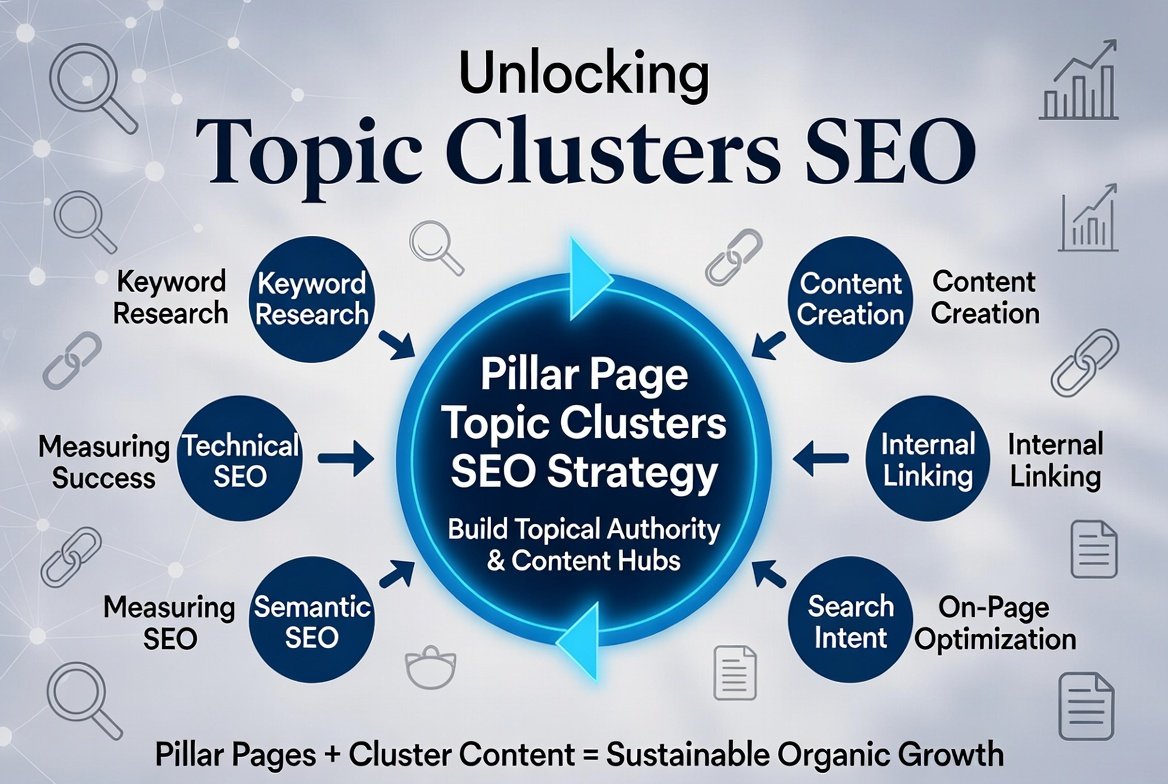
Smart website owners and marketers are shifting away from isolated blog posts toward structured approaches that demonstrate deep expertise. One highly effective method involves topic clusters SEO, which organizes related content into interconnected groups around a central theme. This strategy not only helps search engines understand your site's focus but also guides visitors through a logical journey of discovery. By creating content hubs—centralized resources that link to supporting materials—you signal authority and relevance, leading to better visibility in search results.
The concept has gained significant traction because search engines now prioritize comprehensive coverage of subjects rather than standalone keyword-targeted pages. Instead of chasing individual search terms in isolation, businesses build networks of pages that reinforce each other through strategic internal links. This creates a robust framework that aligns with how people actually research and learn online.
Related keywords such as content clusters, pillar pages, topical authority, semantic SEO, cluster content, internal linking strategy, search intent optimization, and content hub architecture all play supporting roles in this approach. Throughout this guide, we'll explore these elements in depth while providing actionable insights you can implement immediately.
Understanding Topic Clusters and Content Hubs: Definitions and Key Differences
Topic clusters represent a content organization model where a broad "pillar" page covers a main subject comprehensively, while multiple supporting "cluster" pages dive into specific subtopics. These cluster pages link back to the pillar and to each other, forming a cohesive web of information. Content hubs function similarly as centralized repositories but often emphasize navigational ease and user experience through curated indexes or resource libraries.
The pillar page acts as the foundation—think of it as an ultimate guide that answers broad questions. Cluster pages then address narrower aspects, such as practical applications, case examples, or advanced techniques. Internal links between them strengthen the overall structure, helping search engines recognize your site's depth on the chosen topic.
While some professionals use "topic clusters" and "content hubs" interchangeably, subtle differences exist. Content hubs tend to focus more on user-friendly navigation and long-term engagement, whereas topic clusters emphasize SEO signals through precise linking and keyword relationships. Both approaches, however, contribute to the same goal: establishing your website as a trusted source.
This model evolved from traditional keyword-focused SEO into a more holistic strategy. Early SEO relied on optimizing single pages for exact-match phrases, but modern algorithms evaluate entire content ecosystems. By grouping pages thematically, you demonstrate expertise across related areas, which aligns with how search engines now assess relevance.
The Evolution of Content Strategy: From Keywords to Topical Authority
Content strategies have transformed dramatically over the past decade. In the early days of SEO, marketers created pages targeting one primary keyword each. This led to fragmented websites where articles stood alone without clear connections. As algorithms grew smarter, particularly with updates emphasizing user intent and content quality, the need for interconnected structures became evident.
Topic clusters SEO emerged as a natural response to these changes. Pioneered by forward-thinking platforms in the mid-2010s, the approach shifted focus from individual keywords to comprehensive topic coverage. Search engines began rewarding sites that thoroughly explored subjects rather than those simply repeating phrases.
Today, topical authority—the perceived expertise of a website on a specific subject—has become a critical ranking factor. When you build content hubs, you create signals that your site comprehensively understands a domain. This authority extends beyond single pages to influence the entire cluster, improving rankings across related queries.
Semantic SEO further enhances this by incorporating related concepts, synonyms, and user questions naturally. Instead of stuffing keywords, writers focus on answering real audience needs while weaving in supporting ideas. The result is content that feels natural yet highly optimized.
Key Benefits of Implementing Topic Clusters SEO
Adopting topic clusters SEO delivers multiple advantages that compound over time. First, it significantly improves organic search visibility. By covering a topic from multiple angles, your site ranks for a wider array of long-tail and related queries. Search engines recognize the interconnected nature of your content and reward it with higher positions.
Second, user experience improves dramatically. Visitors arrive at a pillar page and discover relevant deeper dives through internal links. This keeps them engaged longer, reduces bounce rates, and increases time on site—metrics that search engines value highly.
Third, content creation becomes more efficient. Rather than brainstorming unrelated posts, teams plan around central themes. This systematic approach prevents duplication and ensures every new piece strengthens existing clusters.
Fourth, backlink potential increases. Comprehensive pillar pages attract natural links from other authoritative sites because they serve as valuable resources. Cluster pages gain authority through association with the pillar.
Finally, conversion opportunities rise. As users progress through the hub—from broad awareness to specific solutions—they encounter calls-to-action at natural points in their journey. This guided path nurtures leads more effectively than scattered content.
Real-world results often include substantial traffic growth within months of implementation. Websites that reorganize around topic clusters frequently see improvements in rankings for competitive terms as search engines better understand their expertise.
How Topic Clusters SEO Enhances Topical Authority and Search Rankings
Topical authority refers to the depth and breadth of knowledge a website demonstrates on a subject. Topic clusters SEO builds this authority by creating a clear map of relationships between pages. When search engines crawl your site, they follow internal links and recognize the thematic connections, strengthening your overall domain authority within that niche.
This process works particularly well with modern algorithms that use machine learning to understand context. Rather than matching exact keywords, systems evaluate whether your content collectively addresses user questions comprehensively. A well-built content hub signals that your site is the go-to resource for the topic.
Internal linking plays a crucial role here. Strategic anchors, such as "content freshness SEO" or "schema markup SEO," guide both users and crawlers while distributing page authority throughout the cluster. Each link reinforces relevance without appearing manipulative.
Search rankings benefit because cluster pages support the pillar while targeting specific intents. For example, a pillar on content marketing might link to clusters on keyword research, audience analysis, and measurement techniques. This structure satisfies diverse search intents within the same topic.
Step-by-Step Guide to Building Effective Topic Clusters
Creating successful topic clusters requires careful planning and execution. Follow these detailed steps to develop a robust strategy.
Step 1: Identify Core Topics and Pillar Ideas Begin by analyzing your business goals, audience needs, and existing content. Choose broad topics that align with your expertise and have sufficient search volume. Use keyword research tools to identify high-potential pillar subjects—those with broad appeal yet room for subtopics.
Step 2: Conduct Thorough Keyword Research Map primary keywords for the pillar page and related secondary terms for clusters. Focus on search intent: informational, navigational, transactional, or commercial. Incorporate semantic variations and question-based phrases to ensure comprehensive coverage.
Step 3: Develop the Pillar Page Create a comprehensive resource—typically 3000+ words—that overviews the main topic. Include sections that naturally lead into subtopics. Optimize for readability with headings, bullet points, and visuals. This page serves as the anchor for your content hub.
Step 4: Create Supporting Cluster Content Develop 8-15 in-depth articles or pages, each focusing on one subtopic. Ensure each piece stands alone while referencing the pillar. Maintain consistent quality and tone across the cluster.
Step 5: Implement Strategic Internal Linking Link every cluster page back to the pillar using descriptive anchor text. Add links between related cluster pages where relevant. Avoid over-optimization—keep links natural and helpful.
Step 6: Optimize for Technical SEO Ensure fast loading times, mobile responsiveness, and proper schema markup. Update older content to fit within clusters, refreshing it as needed. For insights on maintaining relevance, explore content freshness SEO strategies.
Step 7: Monitor, Measure, and Iterate Track performance using analytics tools. Monitor rankings, traffic, and engagement metrics. Expand clusters by adding new supporting content as trends evolve.
This methodical process transforms scattered content into a powerful, interconnected system.
Choosing the Right Tools for Topic Cluster Development
Several tools streamline the process of building and managing content hubs. Keyword research platforms help identify opportunities and group related terms. Content planning software visualizes cluster structures and tracks coverage gaps. Analytics suites reveal which pages perform best and where additional clusters might help.
Schema markup tools enhance how search engines interpret your content relationships. For advanced implementations, consider platforms that analyze topical gaps across your site.
When integrating new elements, remember to align with best practices such as mobile first SEO to ensure broad accessibility.
Real-World Examples of Successful Topic Clusters SEO Implementation
Many websites have achieved remarkable results through topic clusters. Consider a digital marketing blog that created a pillar page on "content strategy fundamentals." Supporting clusters covered audience research, editorial calendars, performance measurement, and distribution channels. Internal links created seamless navigation, resulting in a 150% increase in organic traffic within six months.
Another example involves an e-commerce site focusing on sustainable living. Their content hub on "eco-friendly home products" linked to clusters about materials, energy efficiency, and long-term maintenance. This structure improved rankings for dozens of related queries while boosting product page conversions.
These cases demonstrate how thoughtful organization leads to compounding benefits. The key lies in genuine value creation rather than mechanical linking.
Common Mistakes to Avoid When Building Content Hubs
Even experienced teams sometimes stumble when implementing topic clusters SEO. One frequent error involves weak internal linking. Pages that fail to connect properly appear isolated to both users and search engines.
Another pitfall is creating thin cluster content. Each supporting page must provide substantial value, not merely repeat information from the pillar.
Keyword cannibalization occurs when multiple pages target identical terms without clear differentiation. Proper clustering prevents this by assigning specific intents to each piece.
Neglecting updates represents another risk. Search landscapes change rapidly, so regular content refreshes keep your hubs relevant. Resources on page experience SEO updates can guide these maintenance efforts.
Finally, ignoring user feedback leads to misaligned clusters. Always incorporate analytics data and audience questions when expanding content.
Measuring Success: KPIs for Your Topic Clusters SEO Strategy
Track several key performance indicators to evaluate effectiveness. Organic traffic to the pillar and cluster pages indicates visibility gains. Keyword rankings across the entire cluster reveal authority building.
Engagement metrics—such as average session duration and pages per session—show whether users find the hub valuable. Conversion rates from cluster content demonstrate business impact.
Backlink profiles often improve as authoritative sites reference comprehensive pillars. Use tools to monitor domain authority improvements within your target topics.
Regular audits help identify gaps where additional cluster pages could strengthen the structure. Aim for steady growth rather than dramatic spikes, as sustainable progress signals genuine authority.
Future Trends: Topic Clusters in the Age of AI and Evolving Search
As artificial intelligence transforms search, topic clusters SEO remains more relevant than ever. AI-powered systems excel at understanding relationships between concepts, making well-structured content hubs particularly effective.
Voice search and conversational queries favor comprehensive resources that answer multiple related questions. Content hubs naturally accommodate this by covering topics from various angles.
Visual and multimedia elements will likely play larger roles within clusters. Interactive guides, video explanations, and data visualizations enhance engagement while reinforcing topical depth.
Personalization trends suggest tailoring cluster navigation based on user behavior. Dynamic content hubs that adapt to individual journeys could become standard.
Despite technological advances, the core principle endures: create valuable, interconnected content that genuinely serves your audience.
Integrating Topic Clusters with Broader SEO Practices
Topic clusters SEO works best when combined with other proven tactics. For instance, optimizing for search intent ensures cluster content addresses real user needs. Technical foundations like proper site architecture support the linking structure.
Schema markup helps search engines understand relationships between pages more clearly. Implementing structured data across your content hub can enhance rich results and visibility.
Mobile optimization remains essential as users increasingly access content on various devices. A seamless experience across clusters improves both rankings and satisfaction.
Link building efforts become more effective when targeting pillar pages as high-value assets. External authorities naturally link to comprehensive resources.
By viewing topic clusters as part of an integrated strategy, you maximize their impact. For practical examples of intent-based approaches, review resources on search intent optimization.
Case Studies and Practical Applications Across Industries
Different industries adapt topic clusters SEO uniquely. In healthcare, a pillar page on "preventive wellness" might link to clusters about nutrition, exercise routines, mental health practices, and regular screenings. This creates a trusted resource hub that educates patients while establishing expertise.
E-commerce brands often build hubs around product categories. A pillar on "sustainable fashion choices" connects to clusters detailing fabric types, ethical manufacturing, care instructions, and styling tips. This drives both educational traffic and sales.
B2B companies use clusters for complex solutions. A software provider might center a hub on "digital transformation strategies," with clusters exploring implementation steps, ROI measurement, team training, and technology selection.
Each example shows how tailoring the model to industry needs produces powerful results. The flexibility of content hubs allows adaptation across sectors while maintaining core SEO benefits.
Advanced Techniques for Scaling Your Content Hub Strategy
Once foundational clusters are established, advanced techniques help scale efforts efficiently. Automated content auditing identifies gaps where new cluster pages would strengthen coverage. Topic modeling tools reveal emerging subtopics worth addressing.
Cross-promotion between related hubs creates even larger authority networks. For example, a marketing hub might link strategically to a sales hub where topics overlap naturally.
User-generated content integration can expand clusters organically. Comments, case studies, or community contributions add fresh perspectives while maintaining quality control.
Advanced analytics segmentation helps understand which cluster elements perform best for different audience segments. This data informs future expansions and refinements.
Regular competitive analysis ensures your content hubs remain differentiated. Monitor how competitors structure similar topics and identify opportunities to provide superior depth.
Conclusion: Embracing Topic Clusters SEO for Long-Term Success
Topic clusters SEO represents a fundamental shift toward more intelligent, user-centered content organization. By building content hubs that demonstrate genuine expertise, websites achieve sustainable organic growth while delivering real value to their audiences.
The strategy requires initial investment in planning and creation but yields compounding returns through improved rankings, enhanced user engagement, and stronger brand authority. As search continues evolving, those who master interconnected content structures will maintain competitive advantages.
Start small by identifying one core topic relevant to your business. Develop a pillar page and several supporting clusters, then monitor results before expanding. With consistent effort and attention to quality, your content hubs will become powerful assets that drive meaningful business outcomes.
Remember that success stems from creating genuinely helpful resources rather than following formulas mechanically. Focus on audience needs, maintain high standards, and let strategic linking do the rest. Your journey toward mastering topic clusters SEO begins with that first well-planned pillar page.