Search engine optimization starts with understanding user intent and creating content that truly resonates. One of the most effective ways to achieve this is learning how to find long tail keywords. These specific, longer phrases help bloggers, small business owners, educators, and content creators connect with audiences who are actively searching for detailed solutions rather than broad topics. By focusing on long tail keywords, you can drive qualified traffic that converts better and faces less competition than popular short phrases. This guide will walk you through every aspect, from basics to advanced techniques, so you can build a strong, ethical SEO foundation.
What Are Long Tail Keywords?
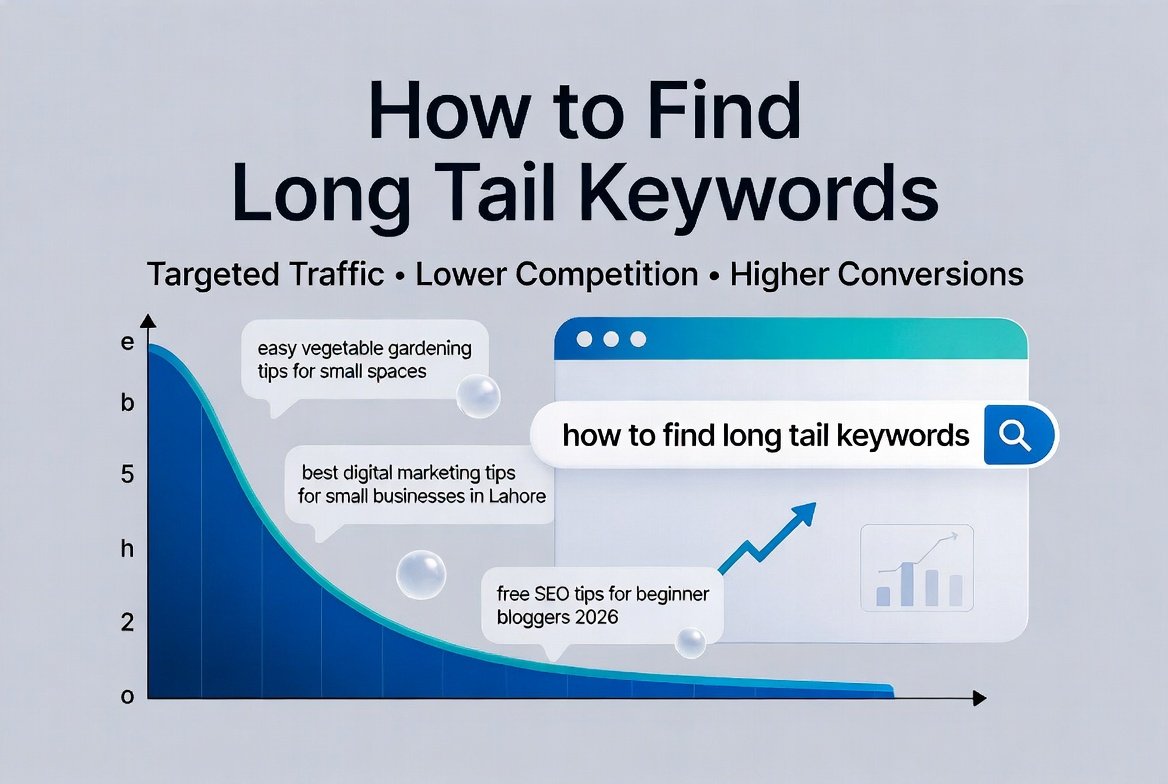
Long tail keywords are search phrases that consist of three or more words and target a very specific audience or query. Unlike short, generic terms such as “SEO tips,” a long tail keyword might read “best free SEO tips for beginner bloggers in 2026.” These phrases usually have lower search volume individually, but collectively they account for the majority of all searches online.
The concept of long tail keywords comes from the idea that while a few popular terms drive massive traffic, the countless specific queries (the “tail”) actually represent a larger overall opportunity. When you understand what are long tail keywords, you realize they mirror real human conversations. People rarely type one or two words when they need precise answers; they ask detailed questions because they want helpful, relevant results.
For example, someone searching “how to start a home garden in Lahore” shows clear intent compared to just “garden.” This specificity makes long tail keywords valuable for anyone creating helpful content. They align perfectly with user needs and help search engines deliver the most useful pages.
Why Long Tail Keywords Matter for Sustainable Growth
Incorporating long tail keywords into your strategy offers numerous advantages that support long-term success without relying on aggressive tactics. First, they face significantly less competition. High-volume short keywords are dominated by large websites, but long tail phrases allow smaller sites to rank faster and earn trust.
Second, long tail keywords often deliver higher conversion rates. Visitors who search specific terms are further along in their decision-making process. They know exactly what they want, so when your content matches their query, they are more likely to read, share, or take the next step—whether that’s subscribing to a newsletter, downloading a guide, or exploring your services.
Third, they improve overall site authority. By ranking for dozens or hundreds of relevant long tail phrases, your website builds topical relevance. Search engines notice this depth and reward the site with better visibility across related searches.
Finally, long tail keywords support ethical, reader-first content creation. They encourage you to produce in-depth, valuable articles rather than thin pages optimized only for traffic. This approach builds genuine audience loyalty and aligns with creating beneficial online experiences.
Short Tail vs Long Tail Keywords: Understanding the Key Differences
To fully appreciate long tail keywords, it helps to compare them directly with short tail (or head) keywords:
- Short Tail Keywords: Usually 1-2 words, high search volume, high competition, broad intent. Example: “gardening.”
- Long Tail Keywords: 3+ words, lower individual volume, lower competition, specific intent. Example: “easy vegetable gardening tips for beginners in small spaces.”
Short tail terms attract a wide audience but often bring unqualified visitors who bounce quickly. Long tail keywords, by contrast, attract fewer but more engaged users. Data from keyword research consistently shows that long tail phrases can represent up to 70% of total search traffic when combined.
The conversion difference is striking. While short tail keywords might have conversion rates around 1-2%, long tail keywords frequently achieve 5-10% or higher because the query matches the content so precisely.
Understanding this distinction guides smarter content planning. Instead of chasing one massive keyword, you target clusters of related long tail phrases that together drive meaningful results.
How to Find Long Tail Keywords: A Complete Step-by-Step Process
Now we reach the heart of the matter—practical methods anyone can use to discover high-potential long tail keywords. The process combines creativity, research tools, and analysis. Follow these detailed steps to build a powerful list tailored to your niche.
Step 1: Brainstorm Seed Keywords and Audience Questions
Begin by listing 5-10 core topics related to your website or business. Think about the main problems your audience faces. For a cooking blog, seed keywords might include “healthy recipes,” “Pakistani cuisine,” or “budget meals.”
Next, turn these into questions. What would a real person type? Use forums, social media comments, or your own customer inquiries as inspiration. Tools like Google’s “People Also Ask” section or related searches at the bottom of results pages reveal natural long tail variations.
This manual brainstorming phase ensures your keywords reflect genuine user language rather than purely data-driven guesses.
Step 2: Leverage Free Search Suggestions and Autocomplete
Type your seed keyword into Google, YouTube, or Bing and note every autocomplete suggestion. These are real searches happening right now. For deeper exploration, use free long tail keyword generator platforms such as AnswerThePublic, which visually maps questions, comparisons, and prepositions around your seed term.
Google Trends and the free version of Ubersuggest also surface related phrases with search volume estimates. Spend time here—often 30-60 minutes of focused work yields dozens of promising ideas.
Step 3: Analyze Competitor Content
Study websites ranking for your seed keywords. Tools like free browser extensions or manual review of top results can show which long tail phrases they target. Look at their article titles, headings, and FAQ sections. What specific questions do they answer?
This competitive intelligence helps you identify gaps—long tail keywords your rivals have missed or covered only superficially.
Step 4: Use Keyword Research Tools Effectively
While paid tools like Ahrefs or SEMrush provide comprehensive data, many free or affordable options work well for beginners. The best free SEO tools for keyword research offer excellent starting points, including volume data, difficulty scores, and related suggestions.
Focus on metrics such as:
- Search volume (even 50-300 monthly searches can be valuable)
- Keyword difficulty (aim for under 30 for easier wins)
- Relevance to your content
Step 5: Explore Question-Based and Conversational Phrases
Voice search and natural language queries continue to grow. Target phrases starting with “how to,” “best way to,” “why does,” or “what are the benefits of.” These often become excellent long tail keywords because they match the way people speak and think.
Step 6: Refine with Location and Intent Modifiers
Add geographic or situational details when appropriate. For businesses in Pakistan, phrases like “best digital marketing tips for small businesses in Lahore” can attract highly targeted local traffic.
How to find long tail keywords becomes even more powerful when you combine these layers—question format, location, and specific benefits.
Best Long Tail Keyword Generator Tools Worth Using
Several user-friendly tools function as effective long tail keyword generator solutions:
- AnswerThePublic: Visualizes questions and comparisons instantly.
- Google Keyword Planner: Free with a Google Ads account; provides volume ranges.
- Ubersuggest: Offers free daily searches with related keywords and content ideas.
- Keyword Surfer: Browser extension that shows search data directly on Google results.
Choose tools based on your budget and needs. Combine multiple generators for the richest data set.
Manual Methods to Discover Long Tail Keywords Without Tools
You don’t always need software. Effective manual techniques include:
- Reviewing customer emails and support tickets for exact phrasing.
- Monitoring social media groups and community forums in your niche.
- Reading product reviews or blog comments to spot recurring questions.
- Analyzing your own Google Analytics search queries report (if available).
These human-centered approaches often uncover keywords that pure data tools might overlook because they capture real emotional and contextual needs.
Advanced Techniques: Competitor Analysis and Content Gaps
For deeper insights, examine how competitors structure their content around long tail keywords. The guide on how to find low competition keywords 2026 provides excellent complementary strategies that pair perfectly with long tail research.
Look for topics where existing articles are short, outdated, or lack visual elements. Filling these gaps with comprehensive, up-to-date content gives you a strong ranking advantage.
Integrating Long Tail Keywords into Your Content Strategy
Finding keywords is only half the battle. The how to create SEO friendly blog posts explains how to weave them naturally into titles, headings, introductions, and body text while keeping content readable and helpful.
Use long tail keywords in:
- Page titles and meta descriptions
- H2 and H3 subheadings
- First 100 words of the article
- Image alt text and file names
- FAQ sections
Always prioritize natural flow. Forced repetition harms user experience and can hurt rankings.
Real-World Examples and Case Studies
Consider a small educational blog targeting students in Pakistan. Instead of competing for “online learning,” the owner targeted “free online courses for matric students in Punjab with certificates.” Within months, the article ranked in the top three positions and attracted steady, engaged traffic.
Another example: A home-cooking site focused on “easy one-pot Pakistani recipes for working mothers under 30 minutes.” This specific long tail keyword brought readers who stayed longer and returned regularly.
These cases illustrate how precision creates sustainable results.
Measuring Success and Tracking Performance
After publishing, monitor progress using Google Search Console and Google Analytics. Track impressions, clicks, and ranking positions for your target long tail keywords. Over time, you will see patterns—some phrases drive traffic quickly while others build authority gradually.
Set realistic goals. A new site might need 3-6 months to see significant movement on competitive long tail keywords.
Common Mistakes to Avoid When Working with Long Tail Keywords
Many beginners make these errors:
- Targeting keywords with zero commercial or informational value.
- Stuffing keywords unnaturally into content.
- Ignoring search intent behind the phrase.
- Failing to create genuinely helpful, in-depth articles.
- Neglecting to update older content with fresh long tail opportunities.
Avoiding these pitfalls keeps your SEO efforts ethical and effective.
Future Trends in Long Tail Keyword Research
As search engines become smarter with artificial intelligence and voice technology, long tail keywords will grow even more important. Conversational, question-based, and experience-focused phrases will dominate. Staying adaptable and continuing to listen to your audience will keep your strategy ahead of the curve.
Conclusion
Mastering how to find long tail keywords transforms your approach to content creation and search visibility. By combining research tools, manual insights, competitor analysis, and reader-first writing, you build a sustainable traffic source that grows naturally over time.
Start small. Pick one topic today, generate 20-30 long tail keywords, and create one high-quality piece of content around them. Over weeks and months, the cumulative effect will surprise you. Focus on providing genuine value, and search engines—and your audience—will reward you consistently.
Remember, successful SEO is not about shortcuts but about understanding people and serving them well. With the strategies outlined here, including the right long tail keyword generator tools and ongoing learning, you are well-equipped to achieve meaningful, long-term growth.